Resources
Operational insights, substantive whitepapers, and news from the team building the evidence layer for Indian trade.
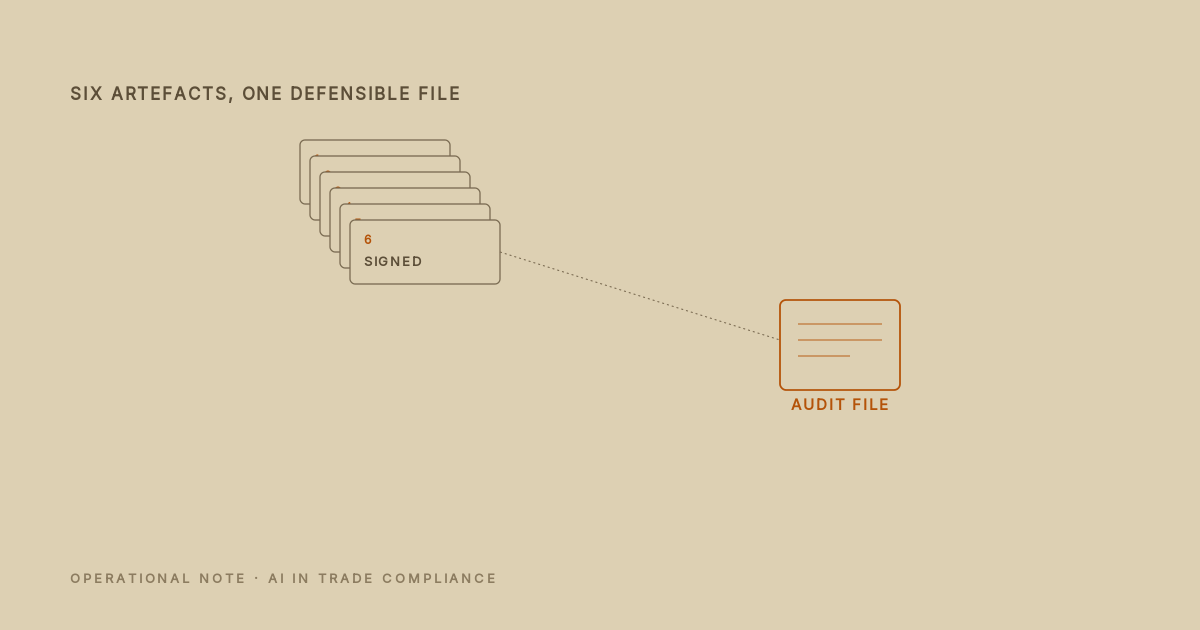
Proving an AI-Assisted Determination to an Auditor
An AI-assisted customs determination is defensible only if the file shows the rule, the evidence and the human review. Six artefacts an audit file must carry.
Aug 7, 2026Read →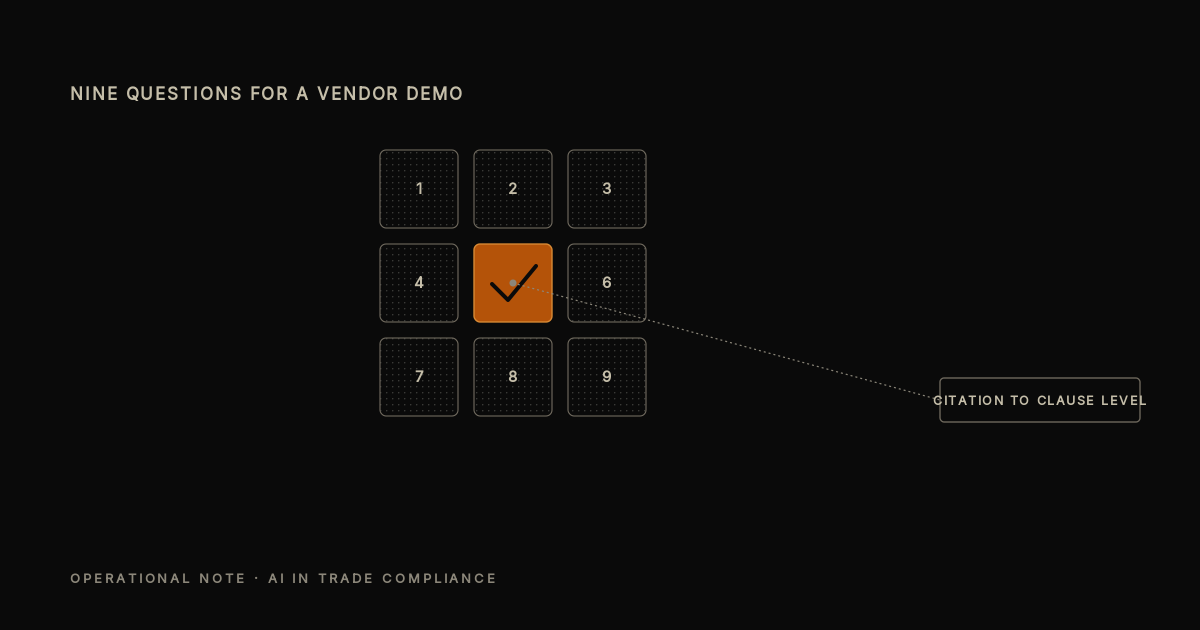
Nine Questions to Ask an AI Trade-Compliance Vendor
Demos test fluency, not defensibility. Nine questions on citations, abstention, logs and liability that separate an evidence system from a fast drafter.
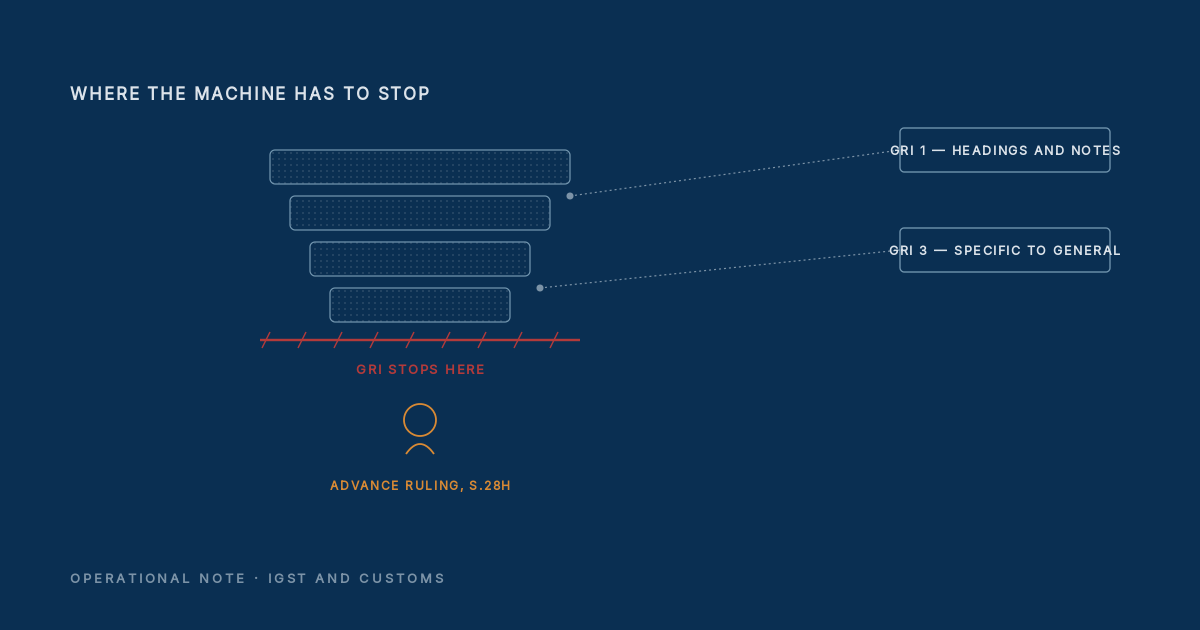
AI and HS Classification: Where the Machine Has to Stop
GRI 1 gives legal force to headings and section notes, not to product descriptions. That is why an AI code suggestion is a hypothesis, not a determination.
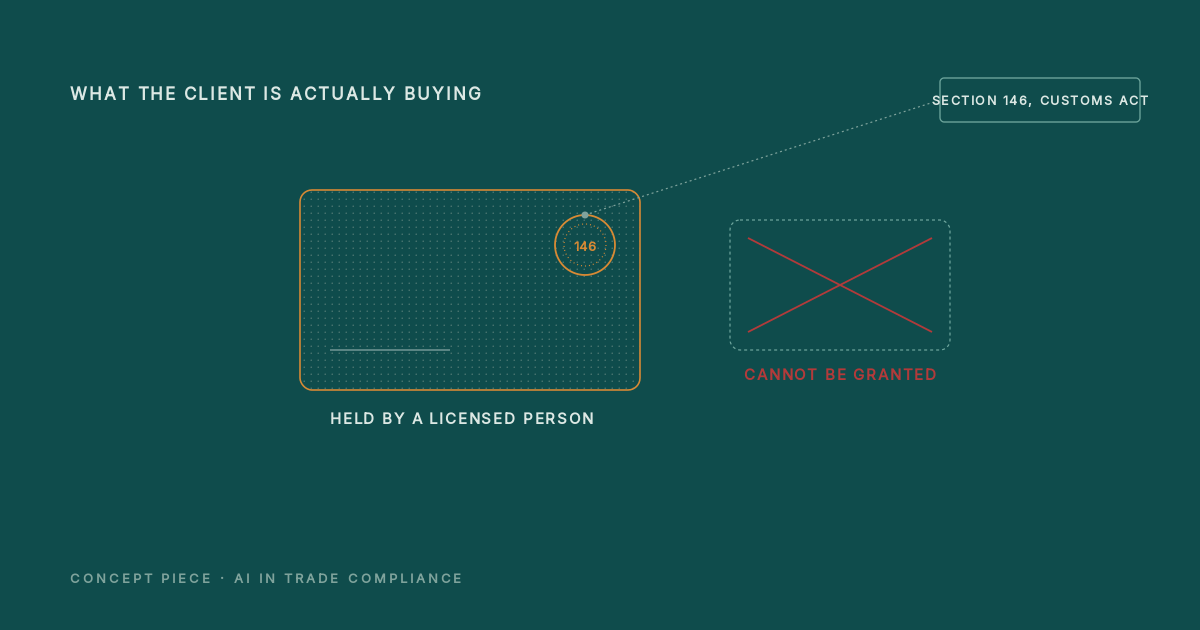
Will AI Replace Customs Brokers? The Licence Says No
A customs broker's licence is issued to a person under section 146 and carries duties software cannot hold. AI compresses the work; it cannot assume the role.
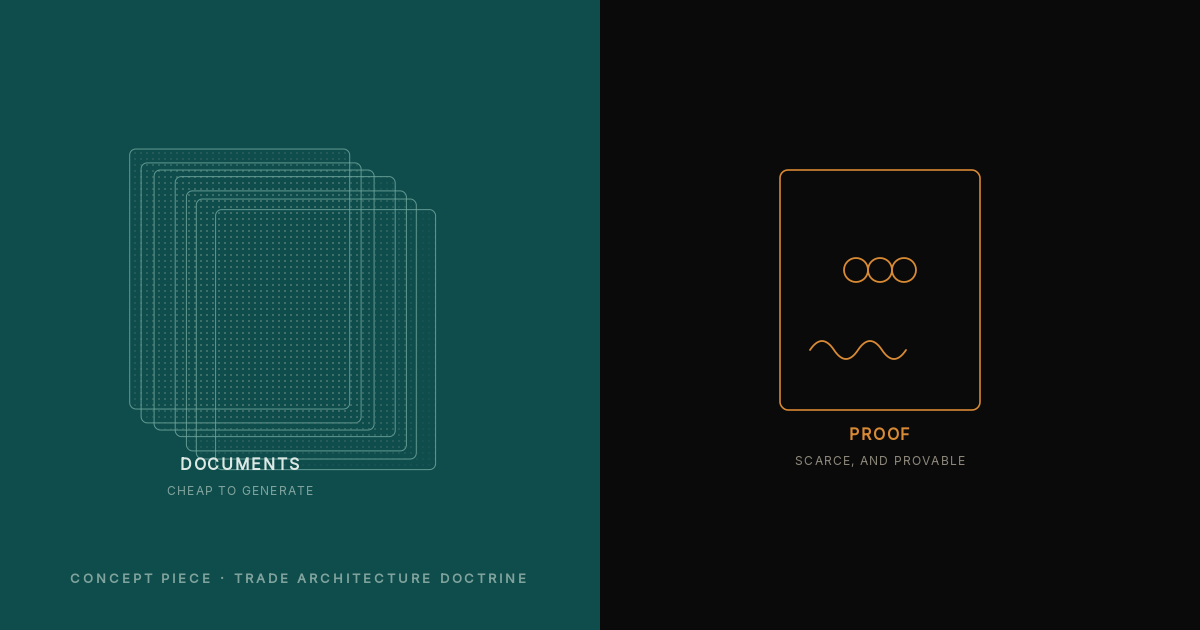
When Documents Get Cheap, Proof Becomes the Product
Trade verification has always tested documents for plausibility. When plausible documents cost nothing to produce, plausibility stops carrying information.
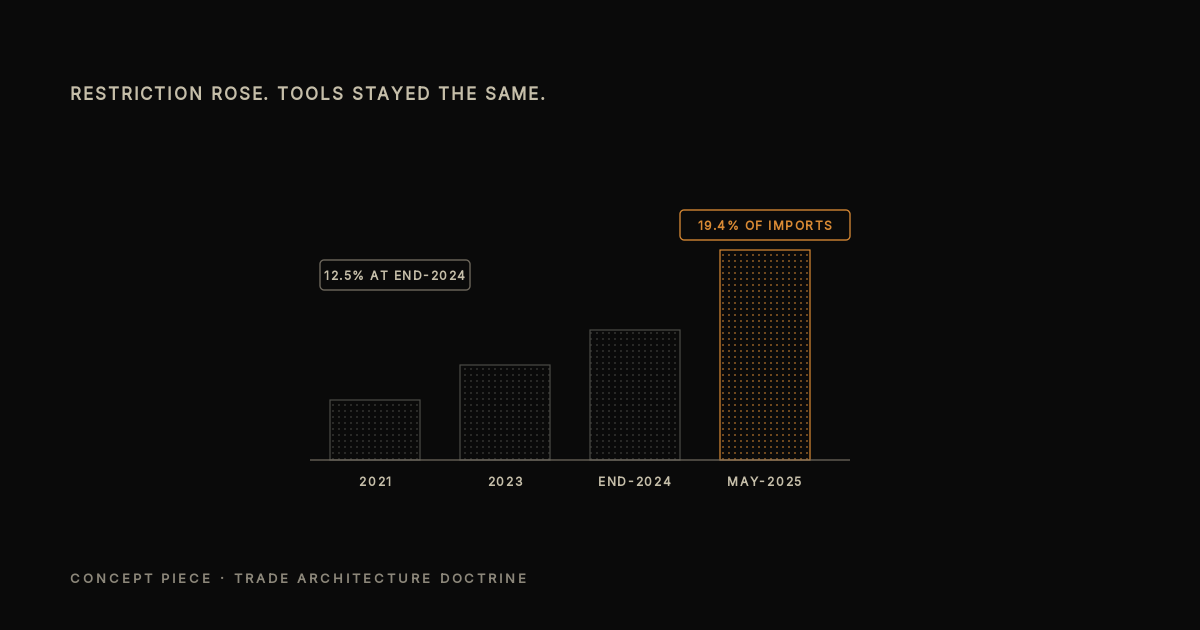
The Compliance Burden Outran the Tools That Managed It
WTO monitoring puts trade under import-restrictive measures at 19.4% of world imports. Volumes did not collapse — shipments simply became heavier to prove.
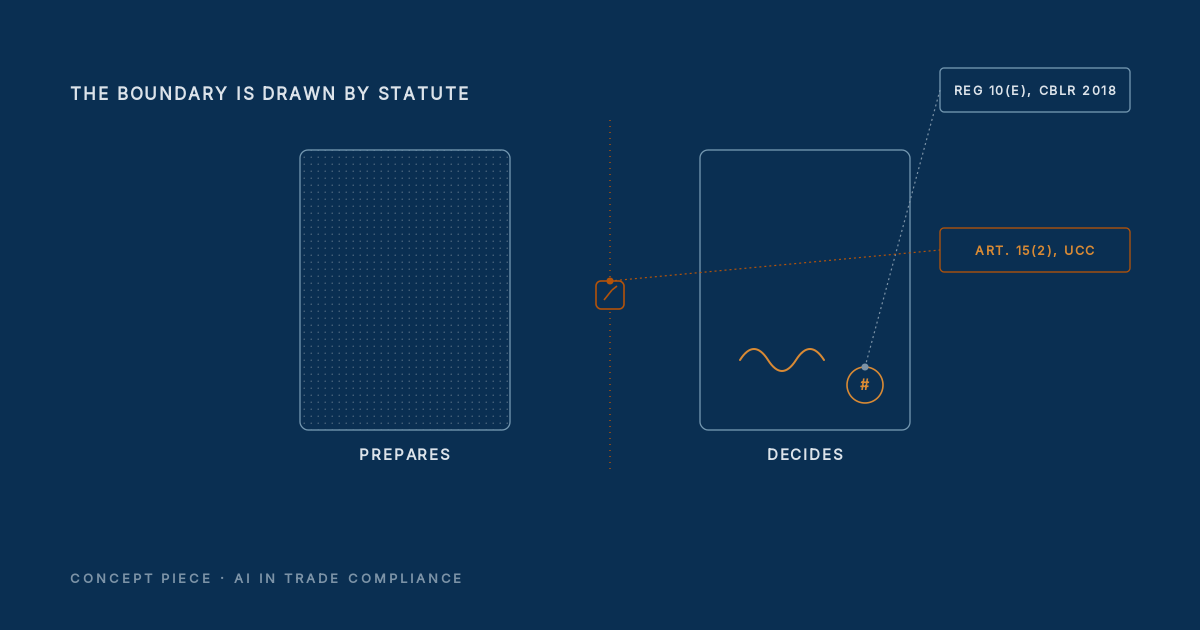
What AI Can and Cannot Decide in Trade Compliance
AI reads and drafts in trade compliance; it cannot hold the licence or the liability. CBLR 2018 and the EU AI Act both put a named human at the decision.
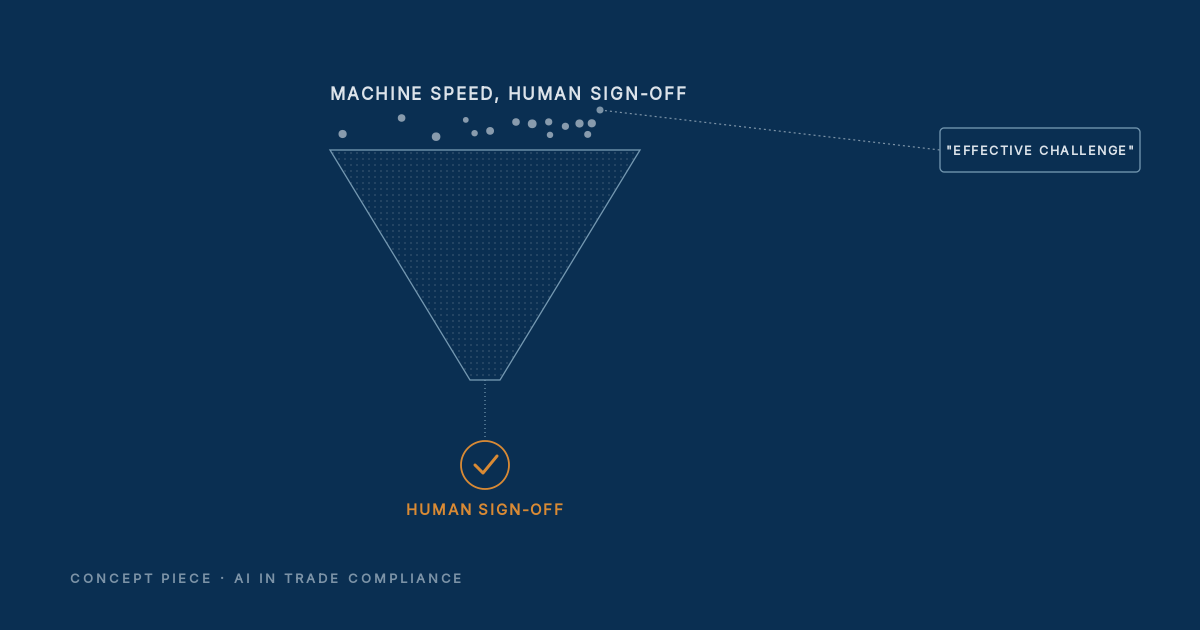
The Review Bottleneck: Machine Speed, Human Sign-Off
AI generates compliance work faster than people can review it. Banking and medical-device regulators met that problem first, by pre-agreeing the envelope.
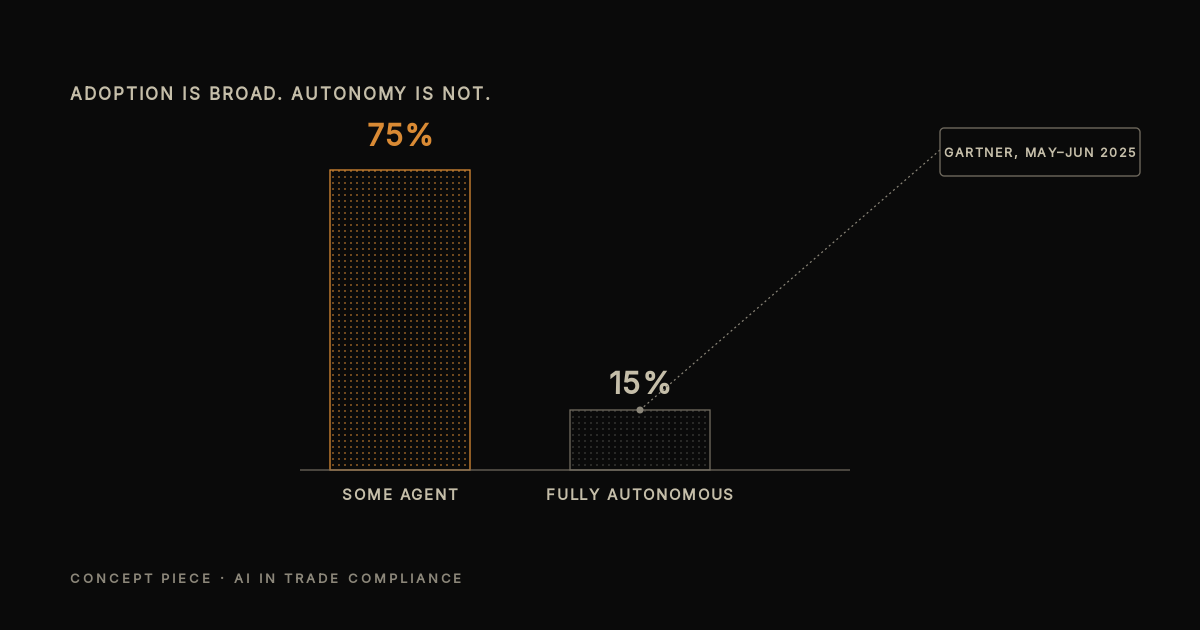
Agentic AI in Trade Compliance: What the Word Actually Means
Agentic means a system that acts, not one that answers. Gartner found just 15% of IT leaders pursuing fully autonomous agents — governance, not capability.
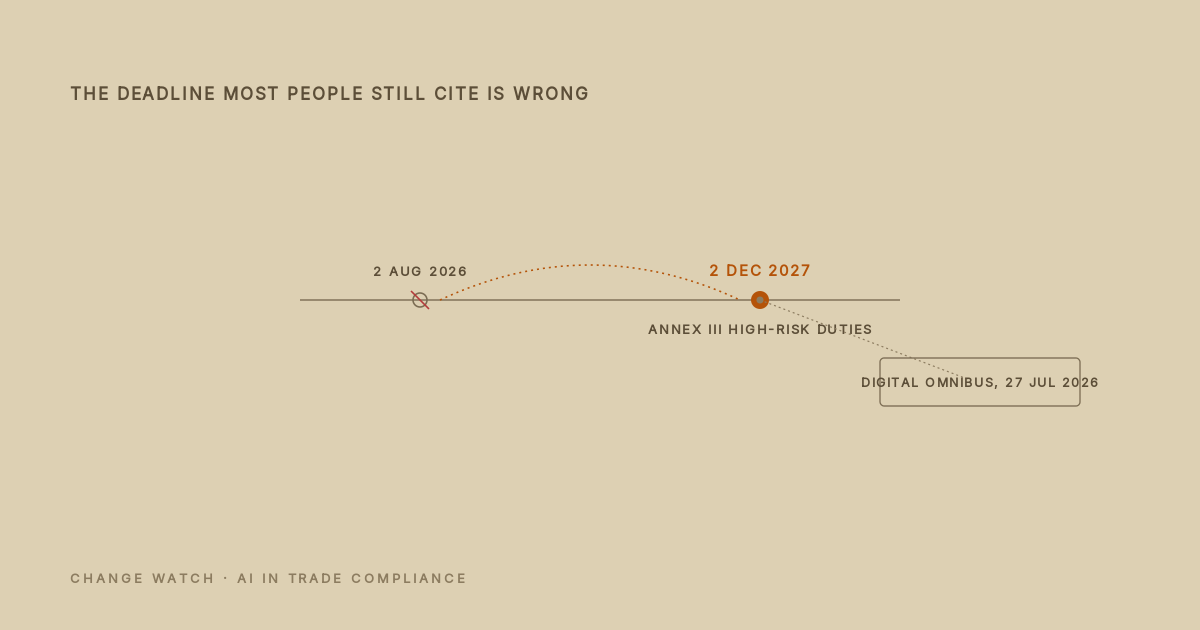
Does the EU AI Act Reach Your Trade-Compliance System?
The Digital Omnibus moved Annex III high-risk duties from 2 August 2026 to 2 December 2027. Transparency and deployer obligations did not move with them.
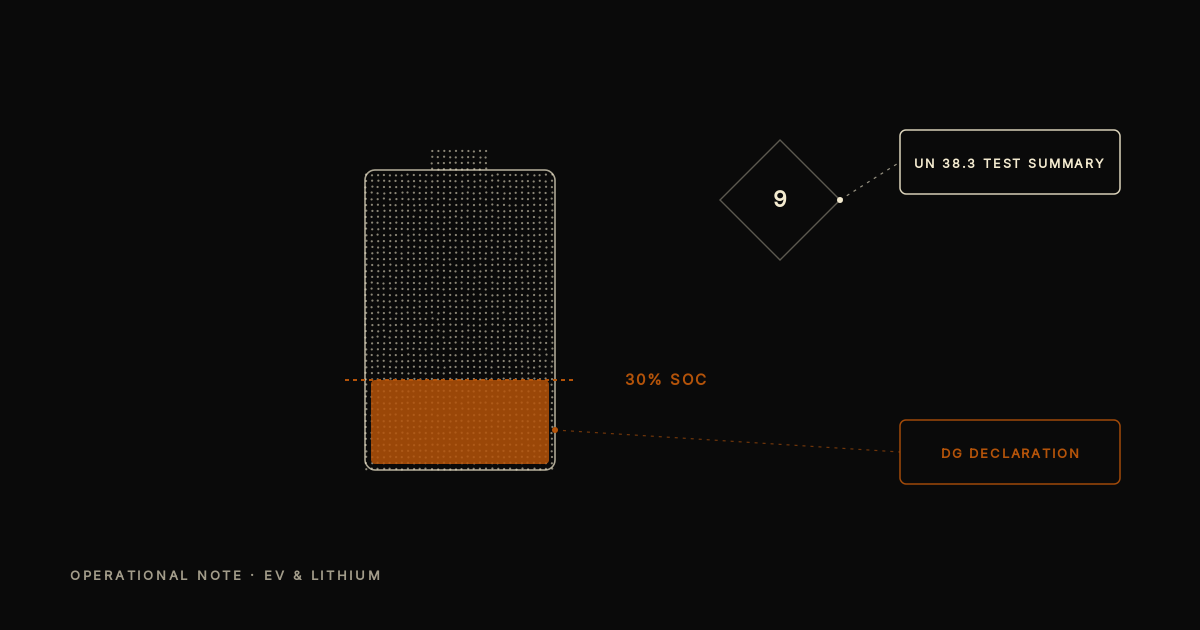
UN 38.3, the DG Declaration and 30% State of Charge, by Mode
Lithium battery exports run on three proofs: the UN 38.3 test summary, the DG declaration, and state of charge — a 30% legal cap by air, practice by sea.
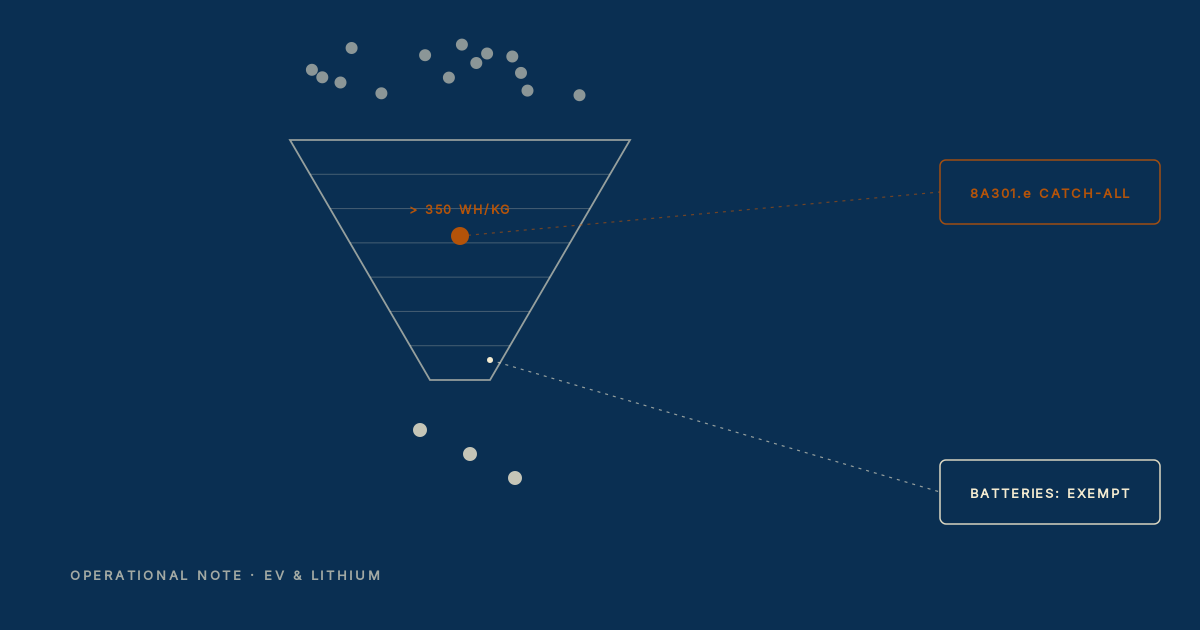
SCOMET and Lithium Batteries: A Conditional Screen, Not a Ban
Ordinary lithium-ion batteries are not SCOMET-controlled: 8A301.e catches bare cells above 350 Wh/kg and exempts batteries. The catch-all is what remains.
The Marine Claim File: What the Surveyor Asks For, in Order
Marine losses of ₹1 lakh or more need a licensed surveyor by law. The claim file the survey runs on — policy, invoice, B/L, carrier notices — is built earlier.
LUT or IGST-Paid: Two Export Routes, Two Failure Chains
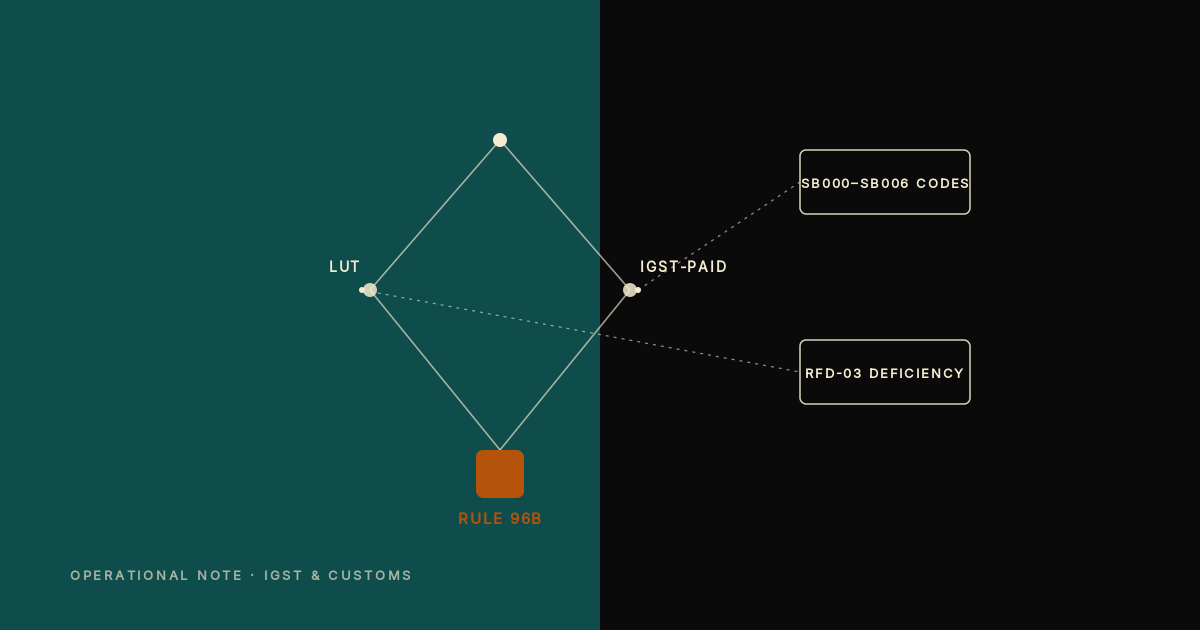
GST exports run two routes: IGST-paid refunds move through ICEGATE's SB codes; LUT refunds through RFD-01 and deficiency memos. Rule 96B polices both.

General Average for Indian Shippers: Bonds, Guarantees and the COI
When general average is declared, cargo is released against security: a GA bond plus an insurer's guarantee — or a cash deposit if the cargo sailed uninsured.
Export Realization in 2026: EDPMS, e-BRC and a Clock That Moved Twice
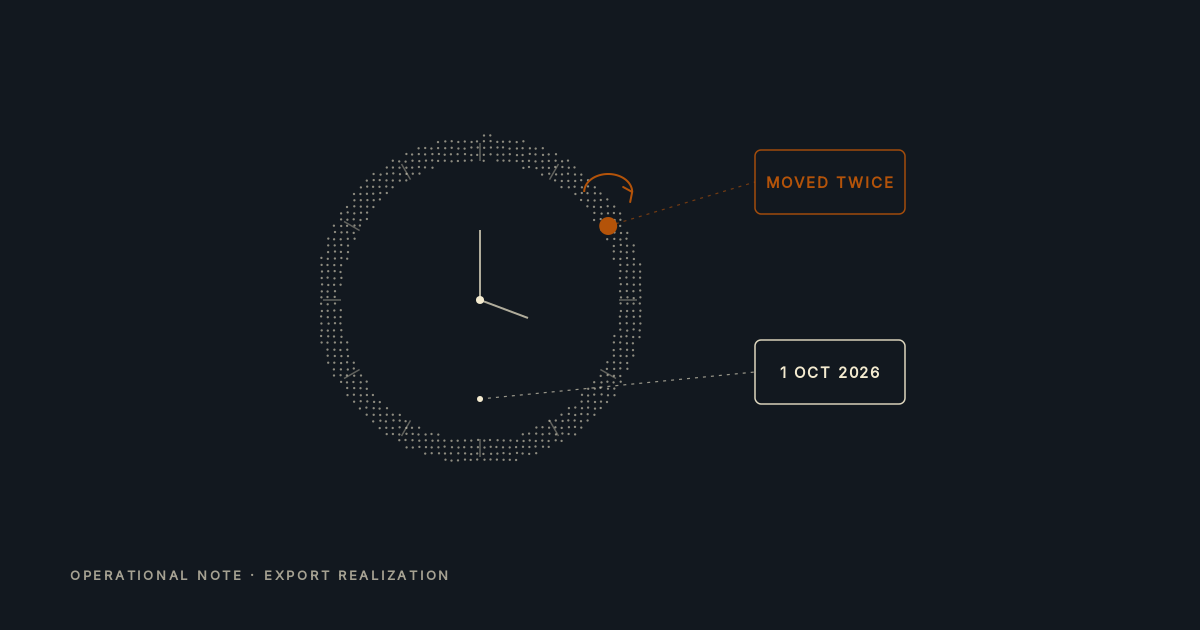
India's export-realization period moved twice in seven months — 9 to 15 and back to 9 — and new FEMA regulations take force 1 October 2026. The date decides.
EDPMS Open Entries and Caution-Listing: How Exporters Get Flagged
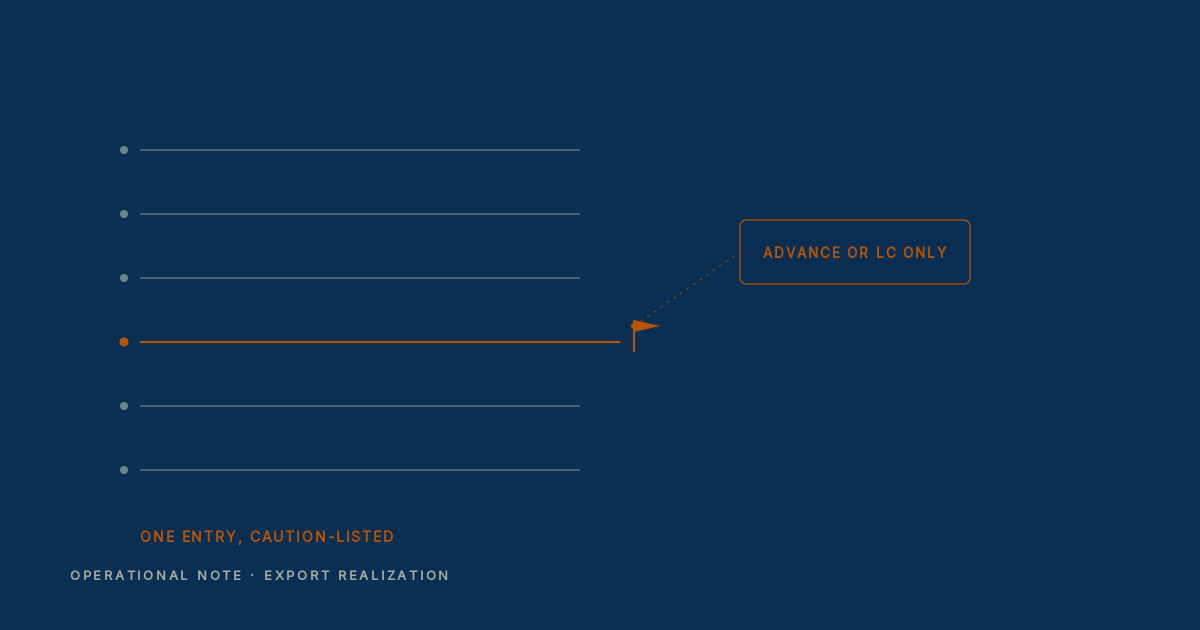
Caution-listing stopped being automatic in 2020: AD banks recommend it on adverse notice or evasion. From October 2026, one year overdue means advance-or-LC.
e-BRC Self-Certification: From Bank Realization to Refund Document
Since 15 November 2023, exporters self-generate e-BRCs on the DGFT portal from bank-uploaded IRMs. Purpose codes gate what qualifies; matching keys decide it.
AD Code Registration on ICEGATE: The Gate Before the Scroll
AD Code registration went port-agnostic in June 2022, but bank accounts still register per port for refunds — and PFMS validates before any money moves.
Reviewer-of-record
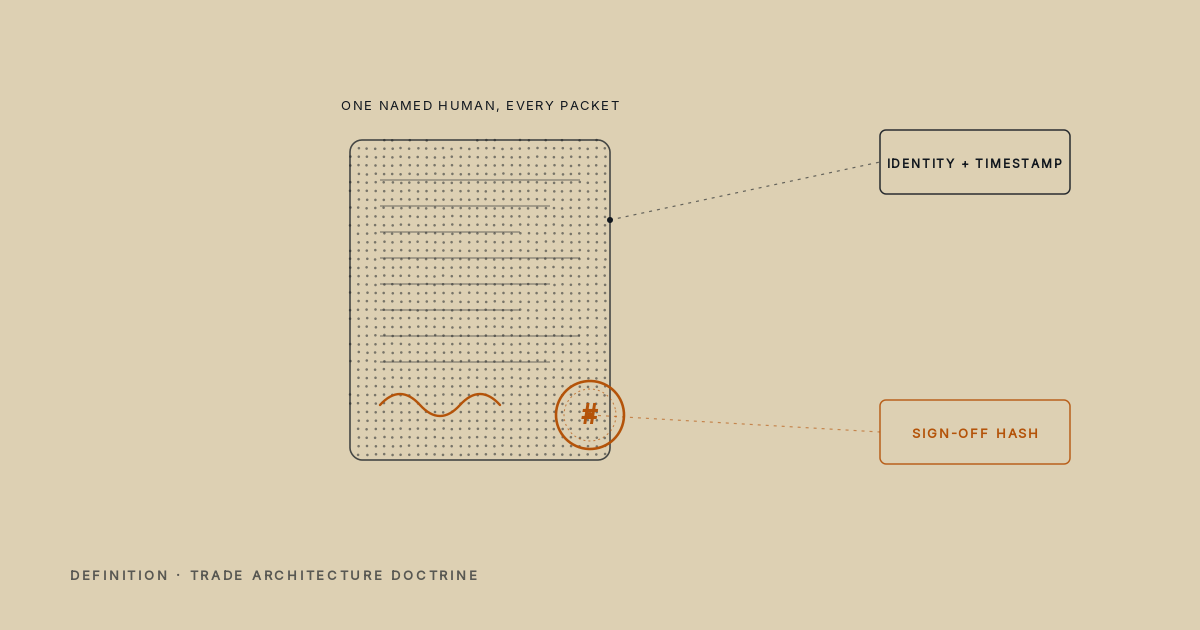
The reviewer-of-record is the named human who examines and signs every evidence packet — identity, timestamp, override log and hash — before it is relied on.
Four-state readiness
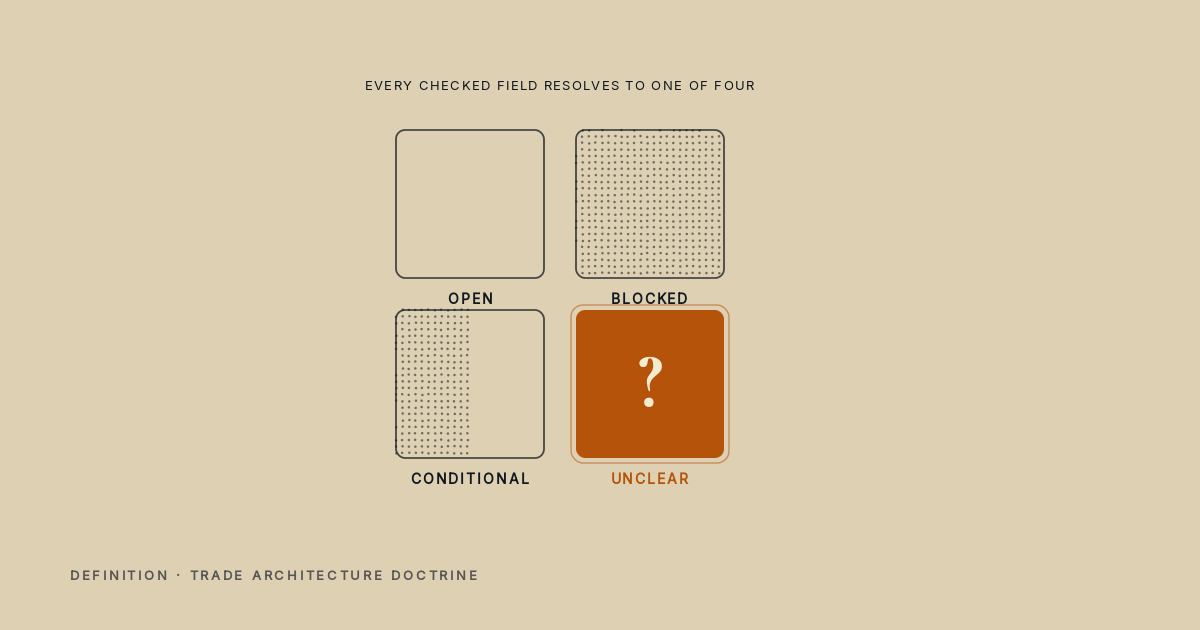
Four-state readiness grades every checked field OPEN, BLOCKED, CONDITIONAL or UNCLEAR — a verdict system where missing evidence can never silently pass.
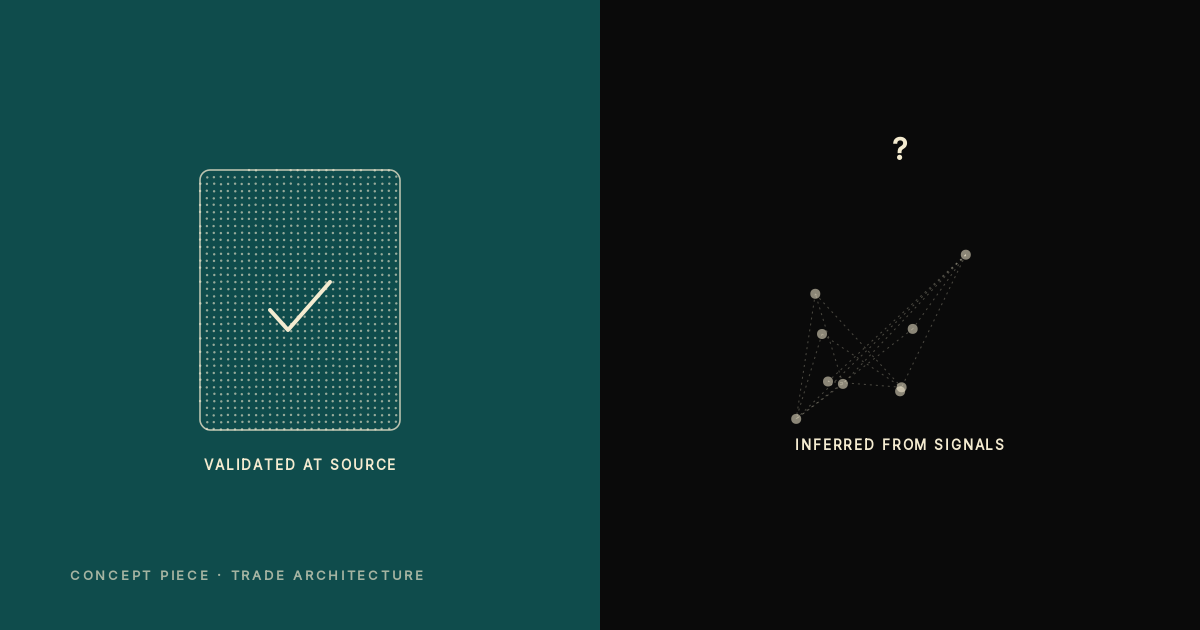
Validated-at-source vs Inferred: Two Ways to Know a Supply Chain
Supply-chain intelligence splits into two kinds: inferred models built from external signals, and validated-at-source records built from the shipment itself.
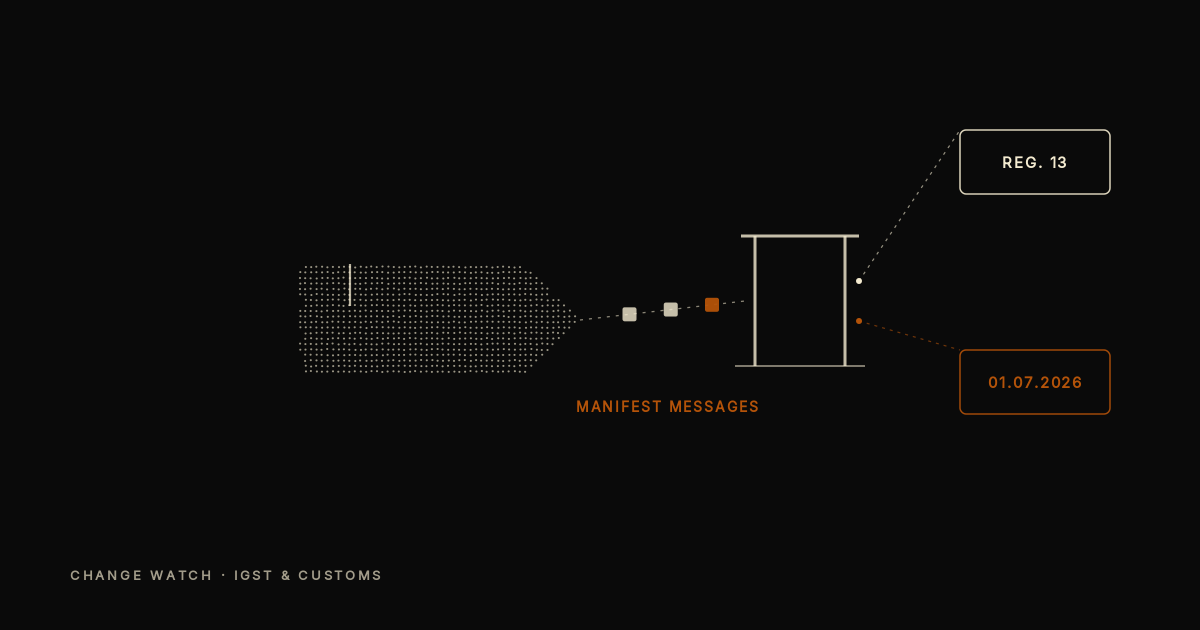
SCMTR Goes Fully Live: India's Manifest Regime After 30 June 2026
SCMTR's transitional phase ended: after extensions to 31 March and then 30 June 2026, CBIC's circular of 1 July 2026 implements the manifest regime pan-India.
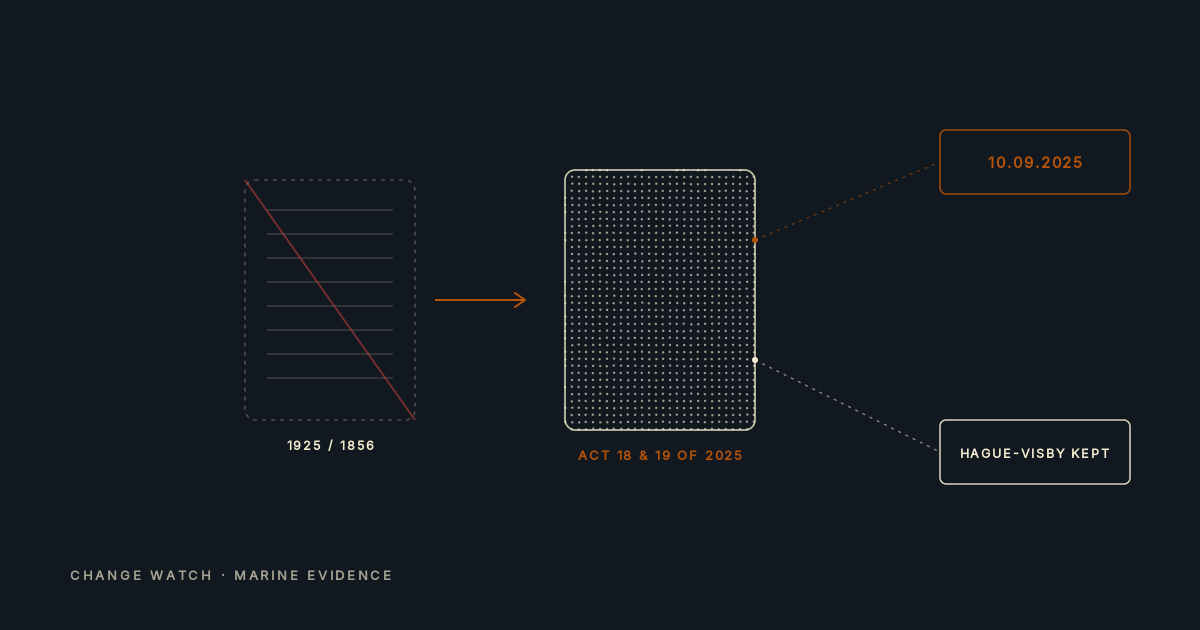
India's New Sea-Carriage Statutes: CGSA 2025 and Bills of Lading Act
On 10 September 2025 India replaced its 1925 carriage act and 1856 bills of lading act in one stroke — Acts 18 and 19 of 2025, commenced by twin notifications.

eCoO 2.0: India's Certificates of Origin Went Fully Electronic
Non-preferential CoOs went e-only on 1 January 2025 and preferential on 17 January via eCoO 2.0 — with back-to-back CoOs, a ₹200 fee and 125 issuing agencies.
Subrogation Time-Bars: CGSA 2025's One Year, MTGA 1993's Nine Months
Cargo suits die by statute: one year under the Carriage of Goods by Sea Act 2025, nine months under MTGA 1993. Expiry extinguishes claim and subrogation.

Open Cover vs Certificate of Insurance: Reconciling CIF+10%
A Certificate of Insurance draws on the open cover only if declared, in time, at 110% of CIF. Under-insurance leaves the assured his own insurer for the gap.

Marine Cargo Claim Denial in India: A Taxonomy of Evidence Gaps
Marine cargo claims in India fail on evidence, not perils: Section 64VB premium timing, packing exclusions, notice windows and expired time-bars decide them.

LC First Presentations: Why Seven in Ten Fail on Documents
ICC surveys found ~70% of LC presentations rejected first time. UCP 600 gives banks five days and one refusal notice; the fixable causes are documentary.

HS Classification Drift Across the Invoice, Shipping Bill and COO
HS codes drift across the invoice, Shipping Bill and Certificate of Origin — one digit shifts duty, RoDTEP rate and origin claims. Shipping Bills need 8 digits.

EU Battery Regulation 2023/1542: The HS 8507.60 Compliance Calendar
EU Battery Regulation dates for HS 8507.60 exporters: CE and importer checks bind now, the passport lands 18.02.2027, due diligence moved to 18.08.2027.

e-SANCHIT: The Upload Failures That Stall Assessment and LEO
e-SANCHIT rejects uploads that break its spec — PDF/A, 200 dpi, 75 KB per page, signed with the ICEGATE-registered DSC. A failed IRN stalls assessment and LEO.
What One Documentation Failure Costs: Demurrage, Fees, Blocked Refunds
One export document error rarely bills you once: container rent climbs by slab, banks charge USD 100 per discrepant set, and the refund clock stops until fixed.
US Tariffs on Indian Exports 2026: From 50% to 10%, and the July Cliff
US tariffs on Indian goods fell from 50% to a 10% surcharge in five steps — a trade deal, a Supreme Court ruling, and a Section 122 clock expiring 24 July 2026.
CBAM's Definitive Regime: What EU Buyers Now Ask Indian Suppliers
CBAM's definitive regime began 1 January 2026: EU importers of steel and aluminium goods over 50 tonnes a year need authorisation, emissions data, certificates.
SB005: Why Your IGST Refund Blocks After EGM and How to Clear It
SB005 blocks an IGST refund when the Shipping Bill invoice number diverges from GSTR-1 Table 6A. The fix is a Concordance Table filed with the customs officer.

Reconciling Invoice, Packing List, B/L and Shipping Bill Before LEO
Invoice, packing list, B/L and Shipping Bill must agree field by field before LEO. Section 149 of the Customs Act bars most amendments once goods are exported.
Invoice Number Formatting: How Tally and ICEGATE Disagree
Rule 46(b) allows 16 characters and only hyphen and slash in a GST invoice number. Formats that drift between Tally, GSTR-1 and the Shipping Bill trigger SB005.

SB001–SB006: The ICEGATE Shipping Bill Error Codes, Explained
SB001–SB006 are ICES validation codes for IGST export refunds. Each code names one mismatch between GSTR-1, the Shipping Bill and the EGM — each with one fix.

RoDTEP 2026: The February Cut, the March Restoration, the Fine Print
DGFT halved RoDTEP rates on 23 February 2026 and restored them from 23 March. A corrigendum kept the cut in force for shipments in the intervening month.

Handbook on India's AI Regulations
A consolidated reference on India's AI regulatory landscape — statutes, advisories, sectoral guidance, and the compliance posture they demand from operating companies.